Introduction
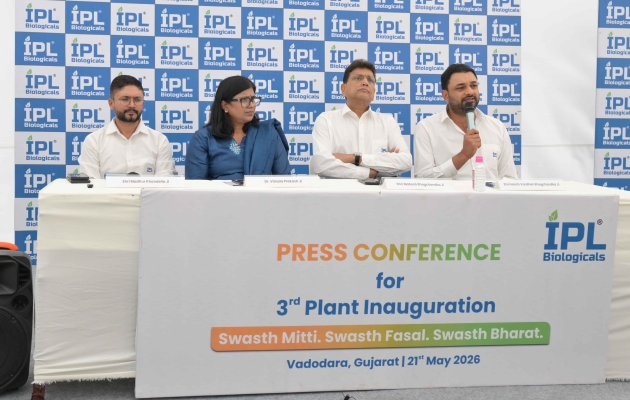
The legacy of India’s Green Revolution is a double-edged sword. While it averted famine, it also tethered the nation's agricultural soul to a chemical-dependent model, leaving behind a legacy of degraded soils and toxic water tables. Today, a formidable new player is stepping onto the field, not with a bat, but with microbes. The unveiling of a mega plant by IPL Biologicals in Gujarat is more than an industrial milestone; it is a strategic offensive in the nation’s burgeoning war against chemical farming. With a new production capacity that catapults its total output to 70,000 litres per day, this facility is poised to scale the promise of biologicals from a niche solution to a mainstream revolution, fundamentally altering the economics and ecology of Indian agriculture.
Context
At the centre of this shift is IPL Biologicals, a company navigating the complex intersection of agriculture and technology. Its newly operational mega plant in Gujarat represents a massive capital investment and a calculated market expansion. Gujarat, a state known for its industrial prowess and progressive agricultural policies, provides an ideal launchpad. The facility is designed not for a niche clientele, but for the millions of farmers across India who are increasingly seeking sustainable, cost-effective alternatives to traditional chemical fertilizers and pesticides. This move directly targets a market at a critical inflection point, driven by both farmer distress and rising consumer demand for clean, residue-free produce.
Background Information
The story of modern Indian agriculture is incomplete without the Green Revolution of the 1960s. Championed by Dr. M.S. Swaminathan, it introduced high-yielding variety (HYV) seeds and a regimen of chemical inputs like urea and DAP, turning India from a food importer to a self-sufficient nation. However, the long-term consequences have become impossible to ignore. Decades of intensive application have led to widespread soil nutrient imbalance, a plummeting water table, and an estimated 120 million hectares of degraded land.
This crisis has been met with a growing policy push from the Indian government. Initiatives like the Paramparagat Krishi Vikas Yojana (PKVY) and the National Mission on Natural Farming are actively encouraging a transition towards sustainable practices. It is within this supportive policy framework that companies like IPL Biologicals are finding both the impetus and the market for their products, which include biofertilizers, biopesticides, and biostimulants derived from natural sources.
Analysis
The strategic significance of IPL Biologicals' new plant cannot be overstated. It addresses the primary bottleneck that has hindered the biologicals sector: scalability. Previously, the sector was fragmented, with smaller players struggling to meet the volume demands of India's vast farming community. By boosting total production to 70,000 litres per day, IPL Biologicals is attempting to achieve the economies of scale necessary to compete directly with the entrenched chemical fertilizer giants.
"This is a game-changer for market dynamics," notes a sector analyst. "When a company can guarantee supply at an industrial scale and a competitive price point, it removes the biggest barrier for farmers to make the switch. It moves biologicals from a 'good-to-have' organic premium to a 'must-have' for sustainable productivity."
The plant’s impact will be felt across three key areas:
- Economic Viability: Lower-cost, locally produced biologicals can reduce the crippling input costs for farmers, directly improving their profit margins.
- Environmental Restoration: Increased adoption of bio-solutions can begin the slow process of rejuvenating India's soil health, reducing chemical runoff into water bodies, and cutting down the carbon footprint of agriculture.
- Strategic Positioning: For IPL Biologicals, this plant solidifies its position as a market leader and sets the stage for potential export opportunities, positioning India as a hub for agricultural biological technology.
Key Takeaways
- Scalability Achieved:** The plant marks a decisive shift from a niche to a scalable, mainstream market for agricultural biologicals in India.
- Direct Economic Challenge:** It introduces a formidable, low-cost competitor to the traditional chemical fertilizer industry, directly impacting farmer economics.
- Policy-Industry Synergy:** The move aligns perfectly with national government missions, creating a powerful ecosystem for the adoption of natural farming.
- Future-Proofing Agriculture:** The facility is a crucial step towards building a resilient, sustainable, and climate-smart agricultural sector for India's future.
Conclusion
The inauguration of the Gujarat plant is not the end of the story, but the powerful beginning of a new chapter. The next critical phase will be on-ground execution: ensuring last-mile delivery to farmers, building awareness about the benefits of biologicals, and demonstrating consistent yield improvements. If successful, this single facility could be the catalyst for a "Second Green Revolution"—one that feeds the nation without poisoning its land. The stage is set for a battle of ideologies, and the microbes, it seems, are finally getting their turn to bat.
Trending SEO Keywords
- IPL Biologicals
- Gujarat plant
- chemical-free farming
- biologicals in agriculture
- natural farming India
- biofertilizers market
- sustainable agriculture India